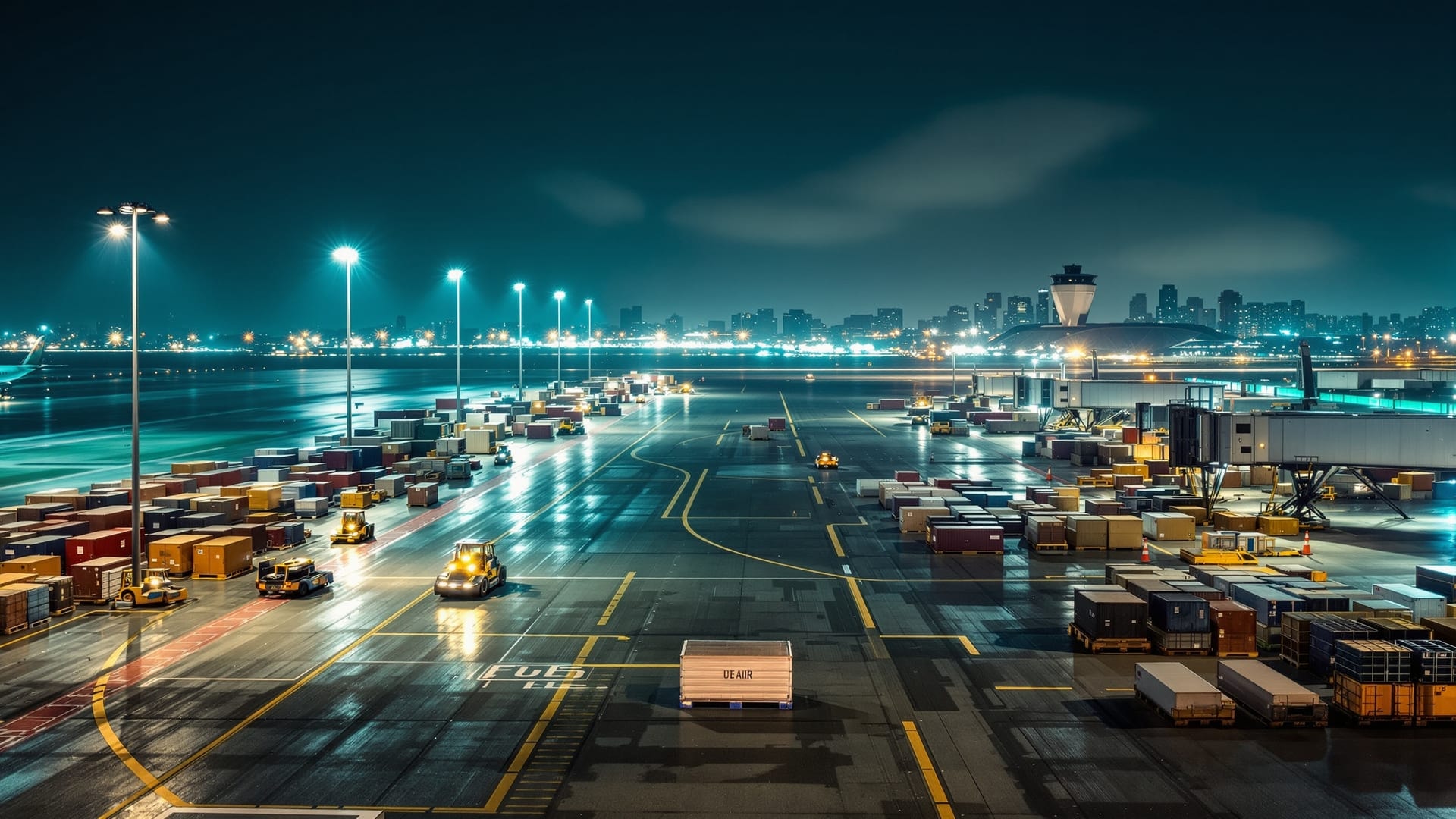
Why Asia Dominates the Freight Map
Manufacturing density, express integrator hubs and enormous transhipment airports mean the region carries a disproportionate share of global air freight — IATA's air cargo market data tracks the flows if you want the numbers. In practice it means dense night operations, sophisticated freight terminals, and airports where the cargo side is a serious facility rather than an afterthought at the end of a taxiway.
Rest
The regional rest problems are heat, humidity and construction.
- Air conditioning is the sleep variable. A unit that cycles loudly, drips, or cannot be set below a fixed minimum will cost you more sleep than any curtain. Check it before you unpack, and ask to move early rather than at 1100.
- Humidity and bedding. Rooms are often kept cold with heavy bedding; the combination wakes people at odd hours.
- Construction is constant in fast-growing cities and starts early. This is the single most common cause of a ruined day sleep in the region.
- Airport hotels are generally excellent and well used to crews. The trade-off is that you are twenty minutes of expressway from anything worth seeing.
Food
Asia solves the problem described on the Restaurants page better than anywhere else on earth. Night markets, 24-hour convenience stores of a standard that does not exist in the West, hawker centres and food halls mean that being hungry at 0300 is a solved problem in most major cities. Two cautions: be conservative with unfamiliar street food in the twenty-four hours before a duty, and be careful with tap water — in much of the region it is not for drinking, and hotels will provide bottled water for a reason.
Getting About
Metro systems in the major hubs are clean, cheap, safe and comprehensible, and they are almost always a better option than a taxi. Ride-hailing apps are dominant in South East Asia and remove the entire negotiation problem. Have the hotel name and address written in the local script — a card from the front desk is the oldest and still the best solution.
Weather and Season
Typhoon season across the Western Pacific and the monsoon across South and South East Asia both drive the kind of days where a schedule stops meaning anything. Convective weather is intense, seasonal and well forecast; regional meteorological services and the standard aviation weather products cover it, and the World Meteorological Organization publishes the regional climatology if you want to understand the pattern rather than the day.
Practical Odds and Ends
- Visas and crew documentation vary sharply across the region and change. Verify current requirements through official channels before departure every time — this is not somewhere to rely on what was true last year.
- Cash. Several countries are effectively cashless and several are effectively cash-only, and they are next door to each other.
- Local laws on medication, drone equipment and photography near airports differ substantially and are enforced. Do not photograph the ramp.
- Long weekenders are more common here than anywhere, because of how the freight flows westbound. See Entertainment.
Ramp Notes
Cargo terminals in the region's big hubs are highly mechanised and busy at all hours, which means more ground equipment moving around your aircraft than you may be used to. The generic hazards are on Airport Safety, and they apply with extra force where the ramp never quietens down.