What Lives Here
- Airport Safety — the ramp itself: ground equipment, loading, jet blast, foreign object debris, high-visibility discipline, weather on the apron.
- Safety Briefs — the recurring themes worth rereading at the start of a season or a new fleet.
- Note Worthy — the short items: a change, a publication, a hazard somebody has just been reminded of.
- Event Logs — why crews write things down, and where the real ones are published.
The Ground Rules for This Section
They have not changed since the section was created and they are the reason it is safe to publish at all.
Nothing here is operational guidance. Your operator's manuals, your standard operating procedures and your regulator's requirements govern what you do. This section is a place to think about hazards in general terms between duties, not a place to look something up during one.
Nothing company-specific, ever. No operator, no station, no individual, no incident that could be identified. The moment a crew noticeboard starts publishing identifiable event detail it stops being a place where people write honestly, and it starts creating problems for the people who did.
Report it properly. A forum post is not a report. The formal channels exist, they are confidential, and they are what actually changes anything — see Event Logs.
Point at the source. Where an authority has published on a subject, we link rather than paraphrase. The standing references for this section are the FAA, the NTSB, ICAO, IATA for ground handling, and SKYbrary as the general knowledge base.
Why the Ground, Specifically
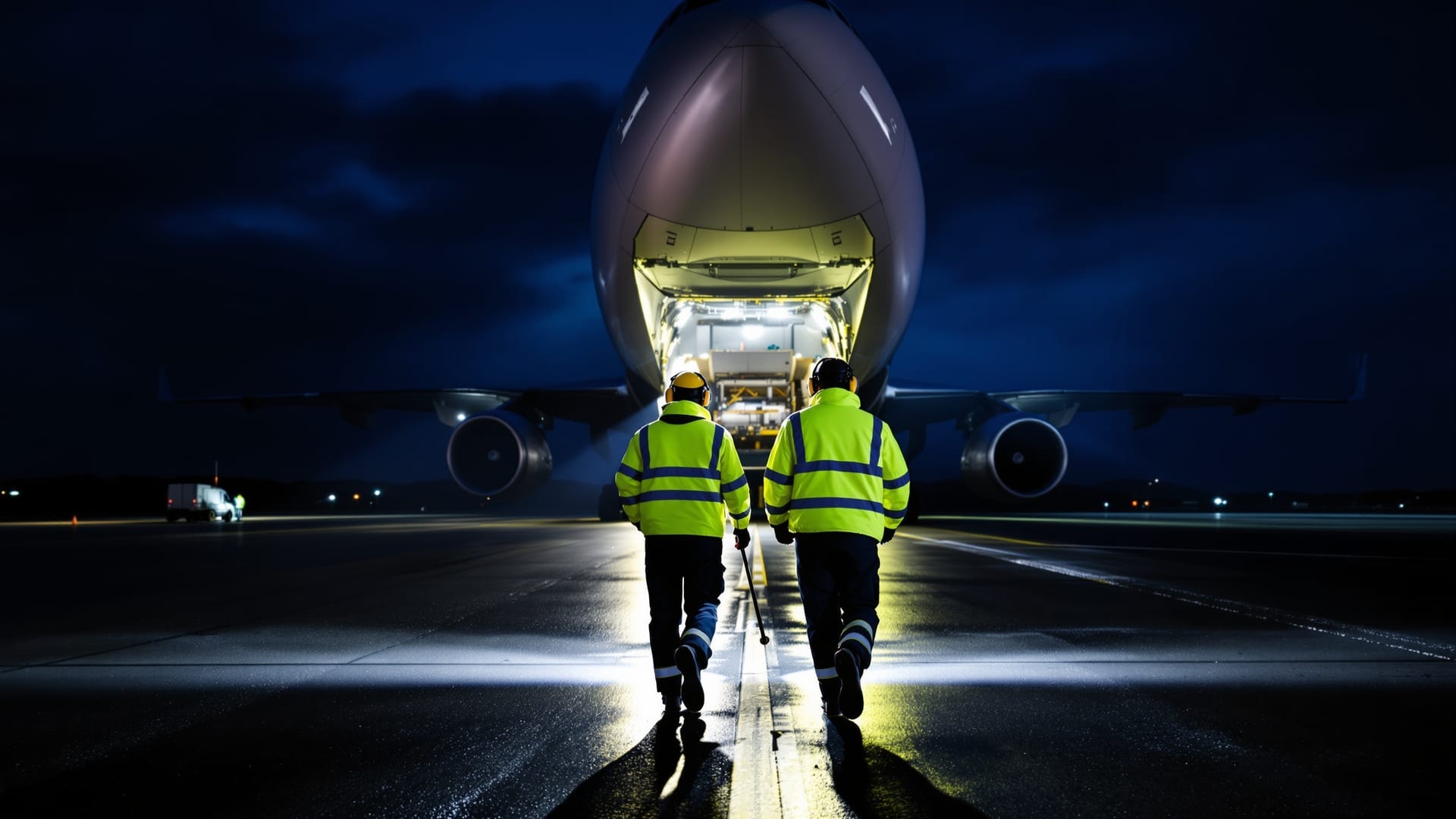
Ramp operations combine everything that produces injury: heavy vehicles reversing, elevated working platforms, moving loads, noise that defeats shouted warnings, darkness, ice or standing water, time pressure from a sort window, and people working their fifth consecutive night. Ground damage is also expensive on a scale that surprises people outside the industry — IATA has published repeatedly on the annual cost of ground damage to the airline industry, and the human cost sits underneath that number.
Freight adds its own factors: heavier and more awkward unit loads than passenger baggage, main-deck loading with the aircraft door open at height, dangerous goods in the load, and outstations where the handling is done by two people and a tug at three in the morning.
Fatigue Is a Safety Topic, Not a Lifestyle One
Every page in the layover half of this site is, underneath, a safety page. Sleep obtained in a dark quiet room is the intervention with the largest effect on how the next duty goes, which is why the Hotels checklist is as long as it is. Fatigue risk management is treated as a formal system by regulators for exactly this reason — see the ICAO fatigue management pages for the framework.
The practical version, from the crew room: if you are wondering whether you are too tired, that is data. Say it early, when it is a scheduling problem, rather than late, when it is an operational one.