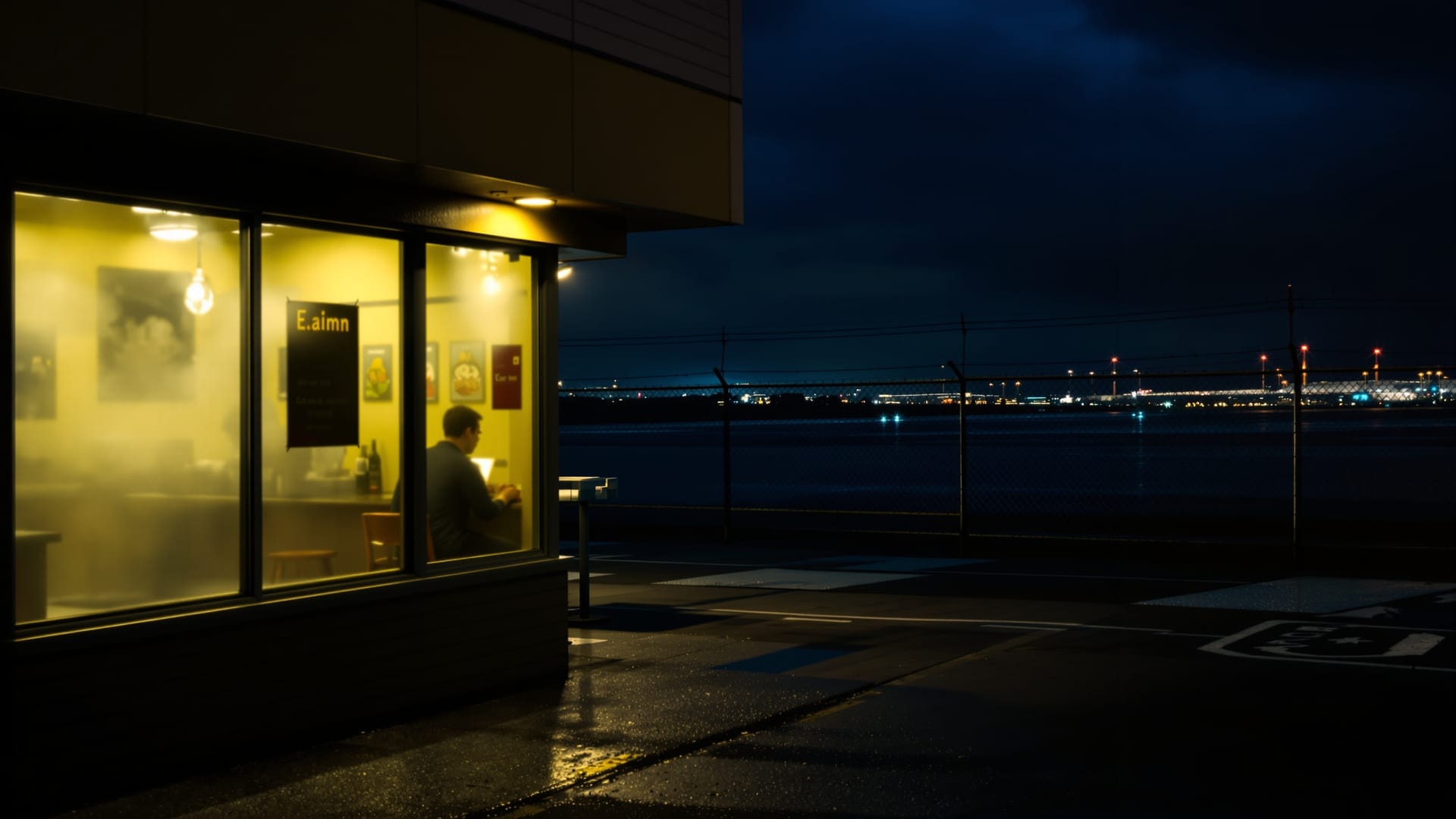
The Two Awkward Hours
On a night rotation your hunger arrives at roughly two in the morning and roughly two in the afternoon. The first is after most kitchens have closed; the second is in the dead zone between lunch service and dinner service almost everywhere in the world. Restaurant listings are written for people on a normal clock and are therefore close to useless to you. What you need to know about any layover city is a much narrower question: what can I get at 0200, and what can I get at 1400?
Building a Layover Food Plan
Before you sleep
Eat something before the block of sleep rather than waking hungry three hours in. Heavy, fatty or very late meals reliably fragment sleep — the Sleep Foundation's shift work guidance covers this and the rest of the sleep-hygiene basics better than we can. Keep it moderate, and keep the alcohol out of it; it shortens the second half of the night even when it helps with the first.
When you wake
This is the meal that determines how the duty goes, and it lands in the mid-afternoon gap. Options that survive the gap almost everywhere: hotel room service, supermarkets and food halls, bakeries, street food markets, hotel bar menus, and anywhere that serves all day rather than in sittings.
Before the duty
Something you already know agrees with you. A layover is a poor place to experiment with a cuisine your stomach has not met, and it is a genuinely poor place to eat raw or lightly cooked food you cannot vouch for. Food-borne illness in the flight deck is an operational problem, not a personal one, which is why many operators have rules about crews eating the same meal.
On the aircraft
Freight sectors are long and catering is thin or absent. Crews who eat well on rotation are almost always the ones carrying something: fruit, nuts, oatcakes, instant noodles, a decent flask. The hotel kettle and a small room fridge do more for nutrition on a two-week rotation than any restaurant.
What Is Worth Writing Down
If you are passing on a food note about a station, the useful facts are:
- What is open all night within walking distance of the hotel, and whether walking there at that hour is sensible.
- Whether the hotel does a genuine 24-hour room service or a sandwich from a fridge.
- Where the nearest supermarket is and when it opens — often more valuable than any restaurant.
- Whether the airport landside has anything at all before the first wave, because on a short day stop that may be your only option.
- Water: whether the tap water is drinkable, and if not, whether the hotel provides enough of it free.
Hydration and the Rest of It
Cabin air is dry, night duties are long, and coffee is the default coping mechanism of the entire industry. Caffeine has a half-life of several hours, so a cup at the top of descent on a night sector is still working against you when you get to the hotel. The usual crew compromise is caffeine early in the duty and none in the last third of it.
Regional Notes
Where and when you can eat varies more by region than almost anything else on this site. Asia is the easiest continent in the world to be hungry at three in the morning; much of Europe is the hardest. See Asia, Europe, Middle East and Latin America for the regional shape of it, and Hotels for what to ask at the desk.