Congestion Is the Local Weather
The Northeast corridor packs several of the world's busiest airports into a small volume of airspace with heavily constrained routings, and it does not take much to make the whole thing gridlock. Ground stops, ground delay programmes, expect-departure-clearance times and reroutes are routine rather than exceptional, and they cascade: a convective line over the mid-Atlantic in the afternoon is still costing the night freight operation at midnight. The FAA's air traffic system status page is the standard place to see what the evening is going to look like before you leave the hotel.
Winter
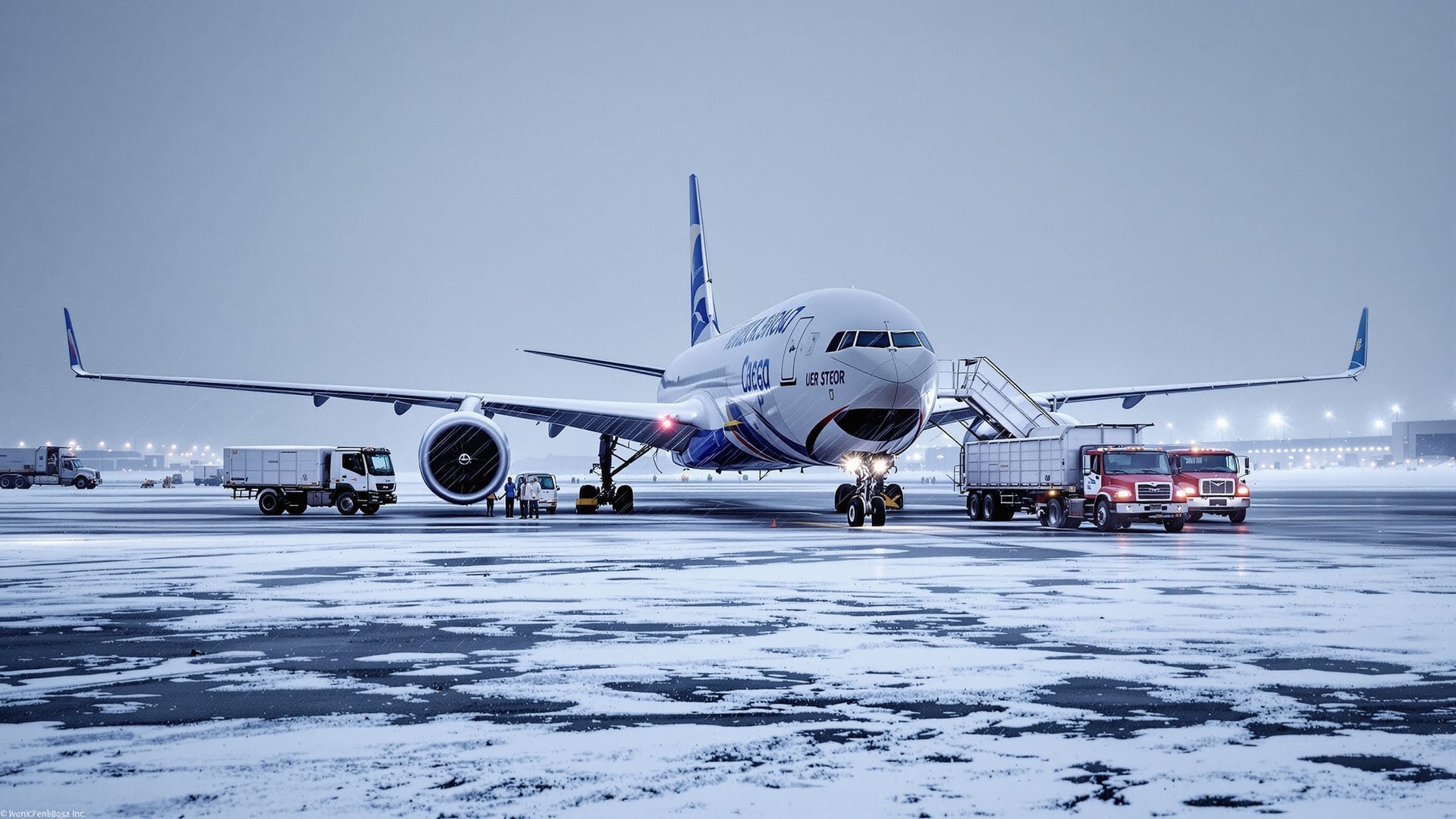
Nor'easters, ice storms and lake-effect snow are the seasonal reality from November to March, and de-icing on a congested ramp at a busy field is where the delays turn into missed sorts. See the winter notes on the Europe page — the operational problem is identical, the volume is higher.
For crews on the ground the winter is mostly a clothing and footwear problem, which sounds trivial until you are standing on an unlit ramp waiting for a van in sleet. Proper boots live in the bag from October.
The Hotel Belt
East Coast cargo hotels cluster in the same places everywhere: an industrial park or an airport service road, with a cluster of chain properties and a diner. This is the category where the original site's entries were most useful, and the recurring pattern in them is worth restating because it has not changed.
The things that made a property good, in the order crews actually cared about:
- A shuttle that runs on a known frequency around the clock, not only during passenger hours.
- A driver who will run out to the freight side rather than dropping you at the passenger terminal — normally with advance notice at the desk.
- A crew room for the gap between checkout and pickup.
- Food available late, and a meal discount if the restaurant is the only option.
- Front desk staff who understand that a guest checking in at 0600 is going to sleep.
If you are passing on an East Coast note, lead with the shuttle. Everything else is recoverable; being stuck on the wrong side of a large airport at 0400 is not.
Getting Into the Cities
This is the one part of the United States where public transport genuinely works for a layover. Most of the major East Coast airports have a rail or subway connection into a city centre that is worth the trip on a long stop, and intercity rail links the whole corridor. On a day stop it is usually still too far — see the five-hour-stop approach on Entertainment.
Practical Notes
- Tolls and rental cars: if you rent, understand the electronic tolling before you drive off; the corridor is full of it.
- Humidity and thunderstorms dominate the summer; the winter problem is ice rather than snow depth.
- Ramp lighting at older cargo facilities is patchy. Carry a torch.
- Traffic makes any ground transfer time estimate optimistic. Add half an hour.
Wider domestic context is on USA; the checklist for the hotel itself is on Hotels.