Curfews and Slots
European air cargo runs on the narrow window between the end of the passenger day and the start of the next one, and a large number of airports impose night restrictions that constrain exactly when a freighter may move. The consequence for crews is a schedule with very little slack in it: an on-time departure is not a courtesy but a hard constraint, and a delay of thirty minutes at the wrong end of the night can lose an entire rotation.
It also produces the region's characteristic rhythm — arrive in the small hours, sleep through the European morning, sit around a hotel in an industrial park through the afternoon, and go again at 2200. The European day stop is the archetypal freight layover and it is the one the Hotels checklist was written for.
Winter
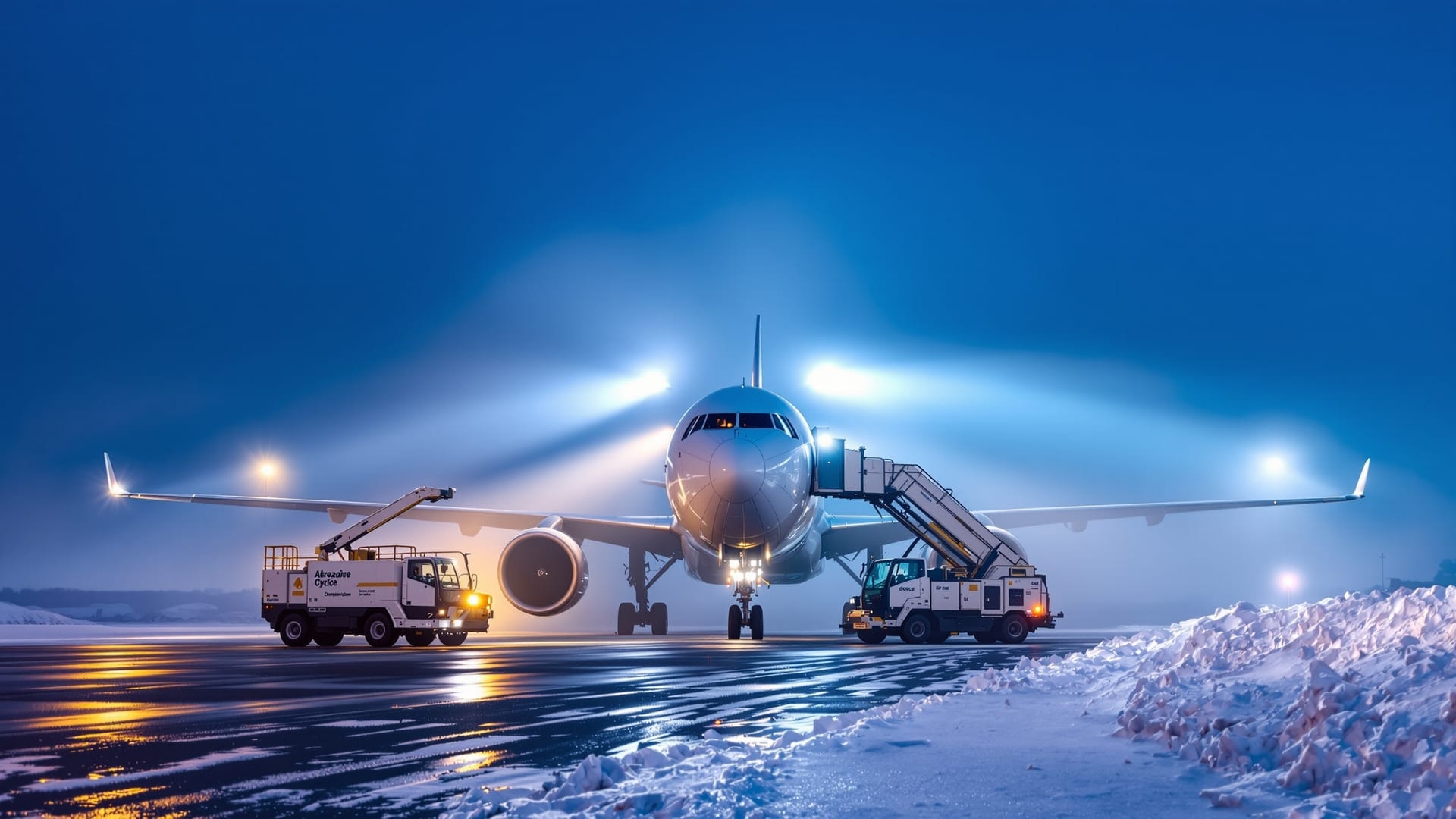
Between roughly November and March, European operations are a de-icing and low-visibility problem. Holdover times, de-icing queues, contaminated runways and low-visibility procedures dominate the winter roster, and the delays they cause interact badly with the curfews described above. EASA publishes the regulatory material and the FAA's aircraft ground deicing material are the best single refresher before the season starts. Nothing here substitutes for your operator's procedures — this is a reminder to reread them in October, not a source.
For crews, the practical winter notes are duller and still matter: the walk from the hotel to the shuttle is genuinely cold, ramps are icy and the walkaround is where people fall, daylight is short enough to matter for circadian adjustment, and hotel heating systems ruin sleep about as often as air conditioning does in Asia.
Food and the European Evening
Europe is the hardest region on this network to eat in at an unusual hour. Kitchens close early and reopen late, Sunday is genuinely closed in much of the continent, and the 1400 hunger described on the Restaurants page falls into a service gap almost everywhere. The reliable answers are supermarkets, bakeries, service stations and hotel room service — and knowing before you land which of them is within walking distance of an industrial-estate hotel.
Getting Around
Rail is the region's great advantage. Many freight airports sit outside cities that are twenty to forty minutes away by a train that actually runs, which turns an unpromising layover into a good one. On a long stop this is almost always the right call — see Entertainment.
Documentation and Borders
Crew documentation requirements differ between Schengen and non-Schengen states, between EU and non-EU states, and have changed repeatedly in recent years. Verify current requirements through official channels for every destination rather than assuming a regional rule — this is one of the few places on this site where the advice is genuinely just "check, every time".
Practical Notes
- Hotels near freight terminals are typically in business parks with nothing walkable. Ask about the shuttle before you accept the room allocation.
- Plugs and voltage vary within the region; carry a universal adaptor.
- Cash is still required in parts of central Europe and effectively obsolete in the north.
- Short sectors mean more takeoffs and landings per duty than anywhere else, which is its own kind of fatigue.